BloodTrain Trains African Regulatory Representatives at the Paul-Ehrlich-Institut
In autumn 2025, the BloodTrain Next Generation team brought together delegates from African medicine regulatory authorities for hands-on training at the Paul-Ehrlich-Institut. The practical sessions connected theory to everyday applications in the regulation of In Vitro Diagnostics for blood screening.

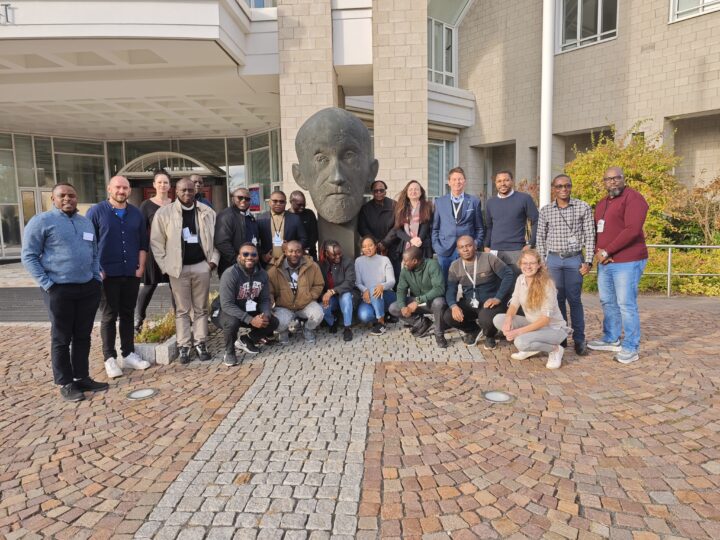
The BloodTrain Next Generation team trained twelve regulators from six African medicines regulatory authorities at the Paul-Ehrlich-Institut (PEI) from 20 to 31 October 2025. The participants deepened their knowledge in the regulation of blood screening in vitro diagnostic medical devices (IVDs) through practical training with PEI IVD experts. They particularly appreciated the real-life case studies and laboratory testing, which vividly illustrated the theory. The training was carried out with the valuable support of the specialist departments.
The PEI has many years of experience as a testing laboratory for IVDs used in blood testing. Since 2024, it has served as the EU Reference Laboratory (EURL) for IVDs in two important product groups in class D – high-risk infection tests. The team carries out conformity assessments, among other tasks. It also offers scientific advice and provides reference materials for IVDs. The training in October was also supported by the staff of the EURL for IVD at the PEI. In addition, the PEI’s IVD vigilance team participated in the event. Its regular task is to monitor and evaluate high-risk IVDs after they have been placed on the market. Finally, external speakers from TÜV Rheinland contributed to the training. In Germany, they are responsible for reviewing the technical dossiers and issuing the final certification.

To complement the presentations by the experts, participants took part in several practical exercises in which they identified critical areas for review in the manufacturers’ documentation. This concerned especially the compliance of IVD with conformity assessments, as well as critical procedures for batch release testing. ‘Thanks to the excellent cooperation between the specialist areas, our African partners gained first-hand knowledge of the entire regulatory spectrum required to ensure the quality, safety and performance of high-risk blood screening tests,’ says Dr Jens Reinhardt, BloodTrain Next Generation project lead at the PEI.
The regulation of IVD is essential for ensuring a safe blood supply
The performance evaluation and monitoring of In Vitro Diagnostic medical devices used in blood testing are essential tasks for medicines regulatory authorities. These activities significantly enhanced the reliability of test systems. A safe blood supply system requires extremely robust and dependable IVDs. For this reason, most products used for blood testing are classified as Class D, the highest risk category. In other words, these test systems must meet particularly high requirements in terms of sensitivity and specificity. Sensitivity means detecting as many pathogen-positive samples as possible. Specificity ensures that as few pathogen-negative samples as possible are incorrectly identified as infected.
In sub-Saharan Africa, the regulation of IVDs is often inadequate
Many countries south of the Sahara lack a robust regulatory framework for IVDs. This can result in substandard or unapproved IVD medical devices being used, posing a significant threat to public health. Since 2019, the BloodTrain project has been working with its African partner countries to build regulatory capacity in this area. To this end, a series of workshops have been held (Project News from 17 October 2024). Building on this, the two-week training course at the PEI specifically addressed the gaps identified by the BloodTrain team on site at the partner authorities. ‘Most authorities lack the resources for laboratory testing and therefore rely on the information provided by manufacturers in dossiers,’ said Dr Reinhardt. ‘Our partners now have a much better understanding of the background knowledge required to interpret this data, and of which information is critical and whether it is consistent,’ he concluded.
Short Facts:
Title: IVD placement: Regulatory Oversight of Blood Screening In Vitro Diagnostics Medical Devices
Date: 20 to 31 October 2025
Location: PEI, Langen, Germany
Participants: IVD regulators from Ghana, Kenya, Nigeria, Zambia, Zimbabwe and Tanzania.