PharmTrain2 Showcases Impact at Major Conference
During the Scientific Conference on Medical Product Regulation in Africa, held in Kenya this year, PharmTrain2 fellows and partners presented their work. They highlighted their achievements through oral presentations, posters, and a dedicated project symposium.
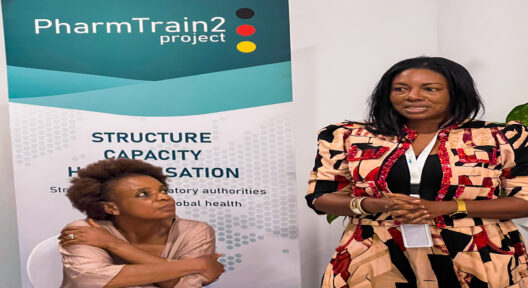
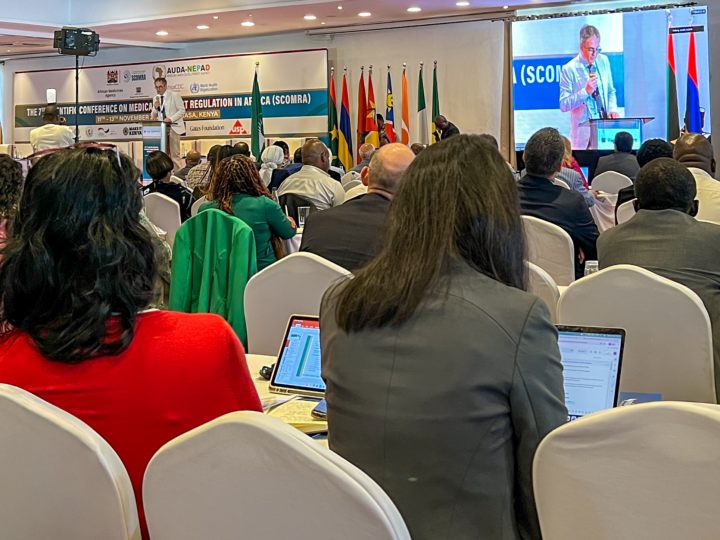
The 7th Scientific Conference on Medical Product Regulation in Africa (SCoMRA) was held in Mombasa, Kenya, from 10 to 14 November 2025. It was organised by the African Union Development Agency – New Partnership for Africa’s Development (AUDA-NEPAD). The conference offered an ideal platform for PharmTrain2 to showcase its achievements. As one of the continent’s most important forums for regulatory dialogue, SCoMRA brought together national medicines regulatory authorities, regional bodies, and international partners. For GHPP PharmTrain2, the conference significantly increased visibility for its activities and outputs in regulatory capacity strengthening.

Fellows at the forefront as the project moves into its next chapter
One of the highlights of the conference was the oral presentations by two ghanaian colleagues, participating in the PharmTrain2 fellowship programmes. They described how the train-the-trainer approach impacts institutional capacity development and the sustainable advancement of biosimilar assessment skills.
These contributions demonstrated how targeted training is enabling african regulators to take on an expanded role as trainers within their own authority and beyond. The training courses were combined mentoring with practical assessment exercises based on a tailored training manual.
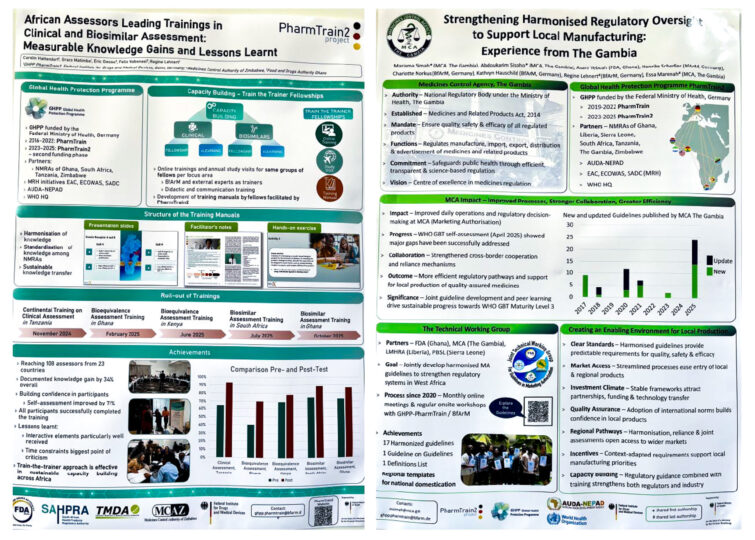
The PharmTrain2 team and its partners also contributed two posters. One of these was submitted by colleagues from the Medicines Control Agency in The Gambia. It presented how they successfully implemented a structure through the process of developing and introducing guidelines and standard operating procedures at their authority. This entire process was facilitated by the project team. The second poster highlighted the measurable results of the train-the-trainer approach rolled out over the past year. This included regional training and increased inter-agency collaboration.
Alongside the scientific sessions, the project hosted a PharmTrain2 side event dedicated to current and future partners. This symposium marked the formal conclusion of the current project phase and the simultaneous initiation of its successor project, PharmTrain3.
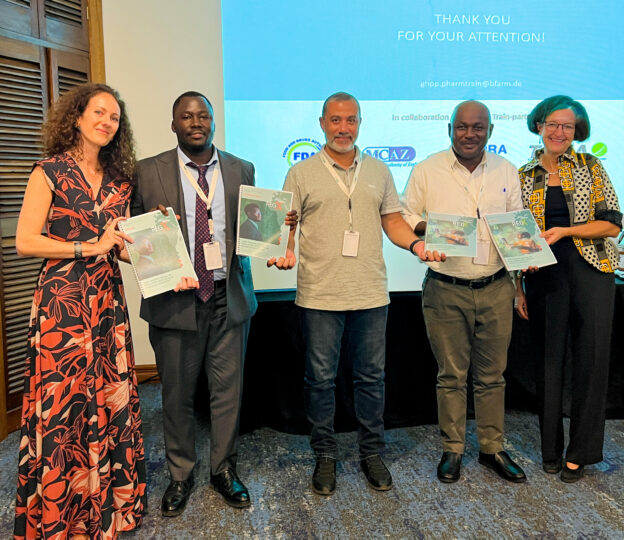
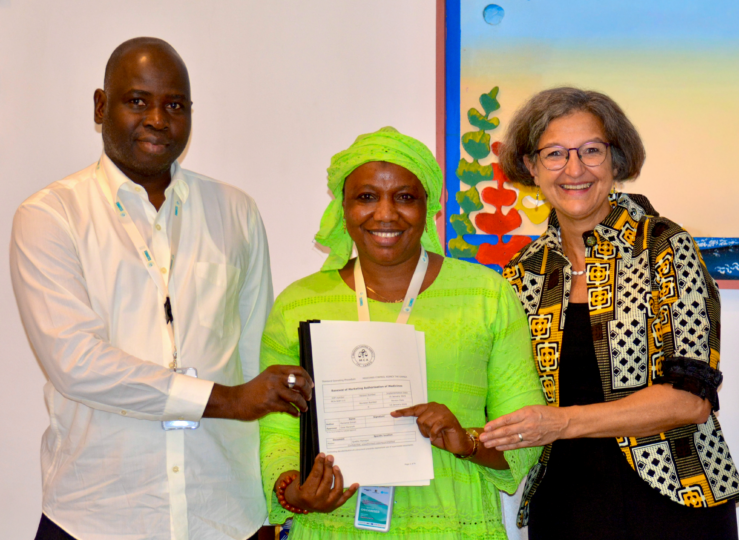
A key milestone of this event was the ceremonial handover of the two training manuals on Clinical and Biosimilar Assessment to the heads of partner institutions. In particular, Regine Lehnert and Kornelia Flämig from PharmTrain2 handed both documents to Professor Kwabena Frimpong-Manso Opuni (CEO of the FDA Ghana), Mohamed Ismail (WHO) and Alex Juma Ismail (AUDA-NEPAD). Both training manuals were developed jointly with the fellows over several years. They provide structured training materials that will continue to support standardised and sustainable learning contents. In addition, Regine Lehnert handed over a total of seven jointly developed standard operating procedures to the MCA, The Gambia. The MCA was represented by Essa Marenah (Executive Director) and Mariama Simah.
Supporting evolving regional regulatory architecture
The AMRH Partnership Platform meeting offered valuable insights into the ongoing transition from the AUDA-NEPAD African Medicines Regulatory Harmonisation (AMRH) initiative to the African Medicines Agency (AMA). Dr Delese Mimi Darko, AMA’s Director General, emphasised the demand for high-quality training, digital learning tools and capacity development. The initiative is expected to take on a central coordinating role in the region within the next year. PharmTrain2, and its successor PharmTrain3, are well placed to contribute to this evolving landscape.
The conference mission enhanced international visibility of PharmTrain2. It reinforced joint efforts to strengthen regulatory systems, expand regional expertise, and support South–South collaboration. The conference underlined how investments in people and structures deliver long-term benefits for local authorities in different African countries.