Turning Genomic Surveillance into Impact in West Africa
With the introduction of the Virus Metagenomics Outbreak Pipeline analysis tool and the implementation of a new sequencing unit in Guéckédou, Guinea, CELESTA strengthens local genomic surveillance, enabling faster detection of viral threats.
Advancing sustainable genomic surveillance capacity in West Africa is a central goal of the GHPP-CELESTA project. In 2025, CELESTA partners achieved two major milestones: the successful training and implementation of the ViMOP bioinformatics pipeline (https://www.bnitm.de/en/news/news/neue-pipeline-vimop), and the establishment of a new sequencing unit at the Viral Hemorrhagic Fever Laboratory in Guéckédou, Guinea (LFHVH-GKD).
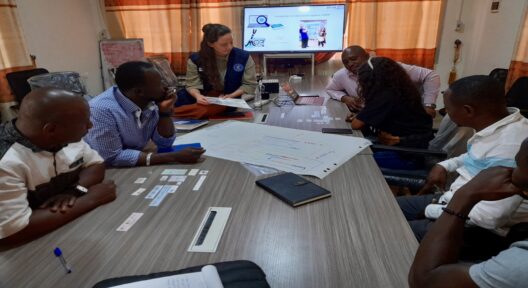
A key step towards local data ownership for countries experiencing viral outbreak events was the introduction of the Virus Metagenomics Outbreak Pipeline (ViMOP). In May 2025, laboratory scientists from CELESTA partner institutions — including LFHV-GKD, the Centre de Recherche en Virologie in Conakry (Guinea), and the Irrua Specialist Teaching Hospital in Nigeria — participated in a hands-on training course led by experts from the Bernhard Nocht Institute for Tropical Medicine (BNITM). The training focused on installing, running the ViMOP analysis tool and the interpretation of results for untargeted nanopore sequencing data.

ViMOP was developed to support outbreak response in resource-limited settings by providing a streamlined, user-friendly workflow for viral metagenomic analysis. Following the training, participating laboratories successfully integrated the pipeline into their routine workflows. Doing so enabled them to independently analyse sequencing data and rapidly generate actionable results for public health decision-making.
In December 2025, CELESTA reached another important milestone with the opening of a new sequencing unit at LFHV-GKD in Guéckédou. As part of CELESTA’s infrastructure support, the laboratory was equipped to perform in-country viral genome sequencing, shortening turnaround times during outbreaks.

The new unit’s first sequencing run successfully processed a Lassa fever-positive clinical sample collected in 2025. This achievement marked the first locally generated Lassa virus genome at the site. It also demonstrated the laboratory’s readiness to contribute genomic data directly to national and regional surveillance efforts.
Together, the implementation of ViMOP and the launch of the Guéckédou sequencing unit represent a significant advance in CELESTA’s mission to strengthen locally led genomic surveillance. By combining training, bioinformatics tools and sequencing infrastructure, the project supports faster outbreak detection, improved response capabilities and long-term resilience of public health laboratory systems in West Africa.