MEVIN 2.0
Advanced Clinical Management of Emerging Viral Infections in Nigeria 2.0
Context
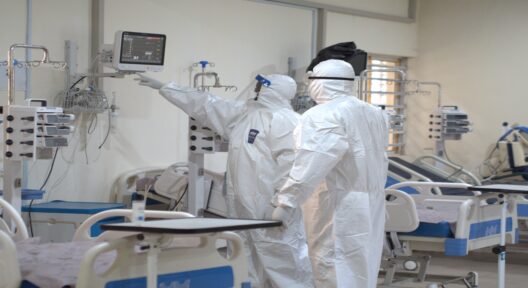
Viral haemorrhagic fevers, especially Lassa fever, cause outbreaks in West Africa, including in Nigeria, Guinea, and Benin. Many referral hospitals face limited intensive care capacity, shortages of essential equipment and supplies, and insufficiently trained staff. This leads to preventable deaths and weak preparedness for larger outbreaks. The MEVIN 2.0 project aims to strengthen advanced clinical management of Lassa fever and other high-consequence infections and viral haemorrhagic fevers to improve patient survival. It also seeks to enhance regional outbreak readiness. To achieve this, the project will expand intensive care capacity at our Nigerian partner hospital, provide key equipment and consumables, and implement structured, long-term clinical training and staff retention measures. In Guinea and Benin, MEVIN 2.0 will conduct needs assessments and tailored trainings, develop standard operating procedures, and support sustainable basic clinical structures to prepare for more advanced management programmes in the future. Finally, the project will establish a global team for clinical outbreak response and training, building on existing networks and partnerships with regional centres, public health institutions, NGOs and academic partners.
Objective
Improved clinical care for patients suffering from viral hemorrhagic fever (VHF) at selected locations in Africa (Nigeria, Guinea, Benin), as well as in Germany and worldwide
In Cooperation with
- Irrua Specialist Teaching Hospital (ISTH), Irrua, Nigeria
- Laboratoire des Fièvres Hémorragiques Virales de Gueckédou (LFHV-GKD), Gueckédou, Guinea
- Unité́ de Maladies Infectieuses Faculté́ de Médecine de l’Université́ de Parakou CHU Départemental de Borgou-Alibori, Parakou, Benin
- Laboratoire des Fièvres Hémorragiques virales de Cotonou, Cotonou, Benin
Thematic priorities
Facts
Activities
-

Research and provision of evidence
The project generates practice-oriented evidence on advanced clinical management of Lassa fever and other viral haemorrhagic fevers. It systematically assesses patient outcomes, training effects, and intensive care capacities at partner sites. Findings will inform clinical guidelines, strengthen outbreak preparedness strategies, and be shared with national authorities and international networks.
-
Networking and cooperation
The project strengthens structured cooperation with Ministries of Health, national public health institutes, and treatment centres in partner countries. Existing regional and academic networks are used to support joint training, rapid information exchange, and coordinated emergency deployments with organisations such as WHO or Doctors Without Borders (Médecins Sans Frontières; MSF).
-
Capacity building
The project trains doctors and nurses in basic clinical skills and advanced ICU care, including sepsis management. Healthcare workers learn to safely treat patients under strict biosafety standards required for high-consequence pathogens.
-
Training and competence development
The project provides targeted upskilling through continuous on-the-job training and a dedicated intensive care curriculum. Healthcare workers gain hands-on experience, such as learning advanced ultrasound techniques. A train-the-trainer approach and academic research opportunities empower staff to become local experts.
-
Procurement of material and equipment
The project will supply medical equipment necessary for basic and advanced treatment of patients with high-consequence infectious pathogens, such as ventilators, monitors, and diagnostic equipment.
-
Policy support
One of the main goals of MEVIN 2.0 is the provision of scientific evidence and actionable guidelines for the management of patients with high-risk infectious pathogens such as Lassa fever. These documents will be shared with national and international health agencies.






-
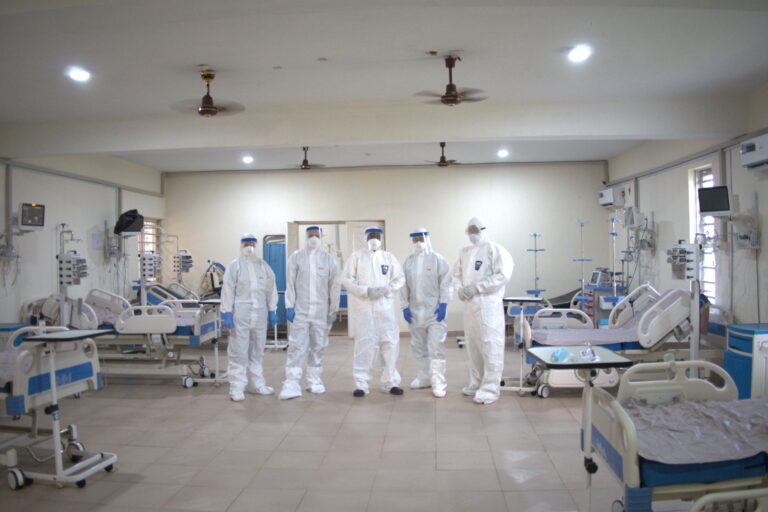
Nigerian-German project team during a training exercise for advanced care for Lassa fever patients in the intensive care unit, Irrua, Nigeria (Source: MEVIN 2.0)