COPE II
The Community-Based One Health Participatory and Empowerment Strategy for One Health Interventions – Phase II (Assessment Phase)
Context
Lassa fever (LF) remains a major public health burden in Nigeria and other West African countries. The virus is primarily transmitted from rodents to humans at the human-animal-environment (HAE) interface, underscoring the need for One Health (OH) approaches. Traditional risk management strategies have often been short-lived and ineffective, as top-down interventions rarely establish sustainable, community-owned risk reduction structures rooted in local contexts. In a globalised world, inadequate measures to reduce the risk of Lassa fever infection heighten the potential for cross-border outbreaks.
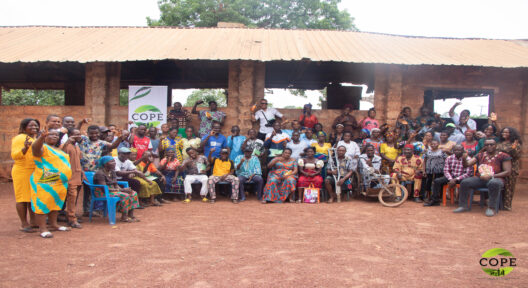
Against this backdrop, the Community-based One Health Participatory and Empowerment (COPE) Project was launched in 2023 to reduce the risk of community-prioritised OH challenges in Ebonyi state, Nigeria. Community-led risk reduction approaches included locally organised awareness-raising, safer food storage, and regular environmental clean-up. COPE II builds on the first project phase and aims to refine and test the strategy regarding sustainability, effectiveness and applicability in other regional and disease contexts. True to its OH approach, the COPE II project partners include the Nigeria Centre for Disease Control and Prevention, the National Veterinary Research Institute of Nigeria and its German counterpart, the Friedrich-Loeffler-Institute, as well as the University of Ibadan’s Department of Environmental Health.
Objective
Reduced Lassa fever (LF) infection risk in two communities in Nigeria by implementing and testing a participatory approach
In Cooperation with
- Nigeria Centre for Disease Control and Prevention (NCDC), Abuja, Nigeria
- University of Ibadan (UoI), Ibadan, Nigeria
- National Veterinary Research Institute Nigeria (NVRI), Vom, Nigeria
- Friedrich-Loeffler-Institut, Insel Riems, Germany
- Bernhard-Nocht-Institut für Tropenmedizin, Hamburg, Germany
Thematic priorities
Facts
Activities
-

Research and provision of evidence
COPE II delivers evidence-based insights into the effectiveness, sustainability, and scalability of community-based OH strategies for reducing OH risks in rural regions of Southern Nigeria. This is based on OH risk assessments and long-term anthropological research as part of a mixed-methods approach that integrates epidemiological, veterinary, environmental, and socio-cultural data.
-
Networking and cooperation
The project strengthens intersectoral OH cooperation between German and Nigerian public health, veterinary health, and environmental health institutions. It promotes regional, national and continental connectedness, as well as the exchange of knowledge on community-based and participatory OH approaches. It also advances sustainable, equity-driven cooperation in OH.
-
Capacity building
The project strengthens public health capacity in Nigeria by supporting the successful development and implementation of a community-led OH strategy to reduce OH risks. This effort is supported by the review of the COPE manual and the integration of the COPE strategy into existing local, national and regional structures. This includes the training of community-based facilitators in Nigeria.
-
Policy support
During COPE II, the COPE strategy of community-led approaches to reduce infection risks will be used in several health protection and promotion programmes of Nigeria CDC to support improvements in national public health. This also aligns with the community protection component of WHO’s strategy on health emergency prevention, preparedness, resilience and response.