Closing the Loop in COPE I: Dissemination & Final Review
Returning research to communities and charting next steps: COPE teams shared One Health findings with project community in South East Nigeria and met to celebrate successes and plan for phase II of COPE.
Over the past three years, the COPE project has piloted a strategy that promotes community-driven approaches to reducing the burden of Lassa fever within a One Health research and action framework in South East Nigeria. An integral part of the COPE strategy is the systematic return of research findings to the communities involved, using formats that are locally meaningful and practically usable.
In November 2025, team members from all COPE partner institutions in Nigeria conducted result dissemination activities in Ebonyi State, marking the transition towards the end of the first project phase. Participants represented the Nigeria Centre for Disease Control and Prevention (NCDC, project lead), the National Veterinary Research Institute (NVRI), and the University of Ibadan (UI). They brought together expertise from epidemiology, veterinary and environmental health, and anthropology.
The findings presented were based on multisectoral research designed to demonstrate changes associated with the community-led health actions. They were shared with stakeholders at the national and state levels, as well as with the community. These stakeholders very much welcomed the community driven approach, emphasised early signs of improved risk reduction practices, and expressed interest in sustaining and scaling locally developed health action concepts.

This is the first time findings from research done in our community have been returned to us in a way we can understand and use.
— Traditional Leader, Ebonyi State, Nigeria
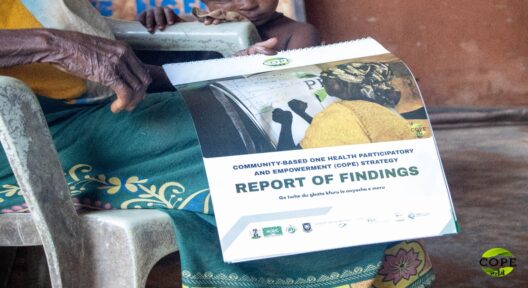
The dissemination was designed not only to share findings but also to reflect on how research results can be communicated in ways that support understanding and everyday use. The central dissemination tool was a calendar structured around the Igbo calendar — a four-day cycle that shapes local rhythms of work, markets, and community life. The calendar presents selected One Health findings from the COPE project. Clear visuals and locally translated messages convey key research insights and embed them in an everyday object that can be used throughout the year.
Dissemination activities in the community included public gatherings, announcements by ‘town criers’, and presentations in the local language, moderated by members of the COPE team who had worked closely with the community over the course of the project. Community members and local stakeholders were actively involved throughout the dissemination days. Community responses highlighted the importance of transparent feedback loops and of receiving results in a form that connects to local practices and routines.
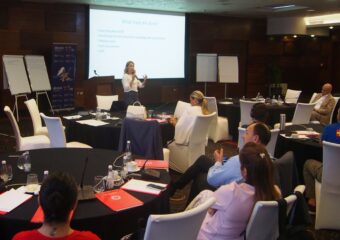
In early December 2025, a final review meeting in Abuja brought all project partners together to reflect on and celebrate the successes of the first project phase. Reflections focused on lessons learned across research and actions. Looking forward, the team discussed practical ways to further enhance collaboration across thematic sub-teams and with actors at state and local levels. They also drafted an initial work plan for COPE II, where they will further assess the sustainability of the COPE strategy and explore how it can be applied in additional regional and disease contexts.