New Publication on Genomic Surveillance Study of ESBL-producing E. coli from Community Wastewater in São Tomé and Príncipe
Recently, BNITM, together with the Laboratório Nacional de Referência da Tuberculose, published a study reporting high levels of antibiotic resistant E. coli in community wastewater in São Tomé city.
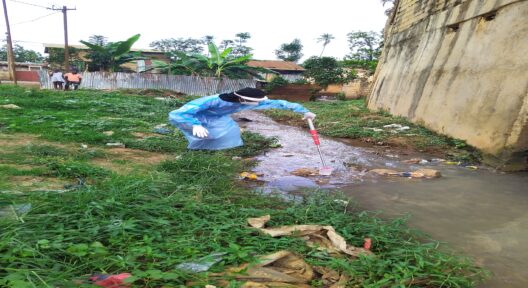
The emergence and spread of antibiotic-resistant bacteria in environmental water sources represents a growing global public health concern. A practical way to monitor the circulation of antimicrobial resistances at community level is wastewater-based surveillance, which was implemented by Bernhard Nocht Institute for Tropical Medicine and Laboratório Nacional de Referência da Tuberculose in São Tomé city.
The monitoring focused on extended-spectrum – β-lactamase (ESBL) producing Escherichia coli, a group of bacteria resistant to commonly used β-lactam antibiotics and thereby making standard treatments ineffective.
Water samples were collected from six community wastewater sites across São Tomé city over a period of eleven months. In total, 115 ESBL-producing E. coli isolates were analysed by long-read whole genome sequencing, yielding high-quality genome assemblies and associated plasmids. These data enabled a comprehensive analysis of antibiotic resistance genes, virulence-associated genes, mobile genetic elements, and phylogenetic relationships.

The results indicate a high occurrence of multi-drug resistances and highly mobile resistance genes in the community environment. This underlines the potential for the spread of resistance through the aquatic environment. Phylogenetic analysis further revealed high genetic diversity among the isolates, pointing to multiple contaminating sources across the community wastewater.
The findings underscore the value of wastewater surveillance as a tool to detect and characterise antibiotic resistance in settings that lack formal sewage systems. The study highlights the need for a coordinated One Health response, enabling better integration of clinical, animal, and environmental sectors to control the further spread of AMR.
The open-access article was published on 18 February 2026 in the scientific journal Water Research X (https://doi.org/10.1016/j.wroa.2026.100512):